


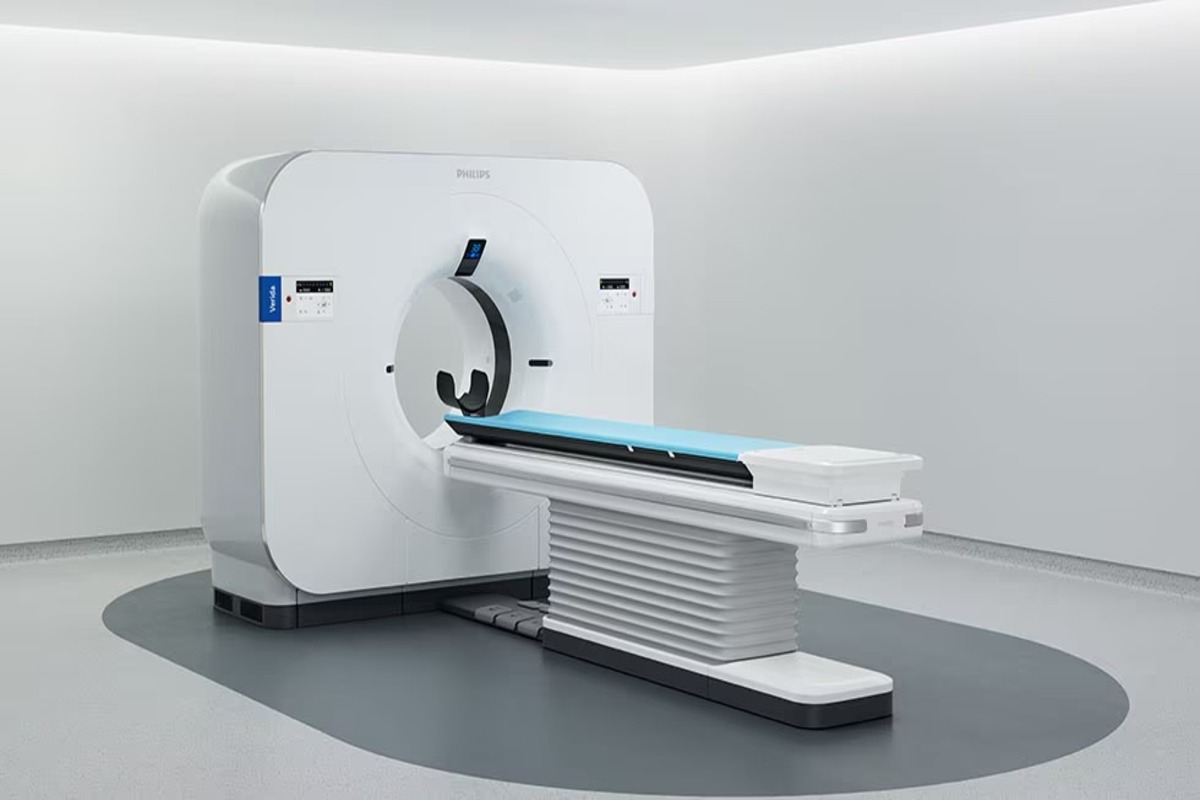
Philips has announced Verida, a new detector-based spectral CT system that incorporates AI across the imaging process. Building on the company’s existing spectral CT platform, which has been adopted in routine clinical use and supported by extensive published research, Verida is designed to improve imaging precision by analyzing how tissues absorb varying x-ray energy levels. The system combines AI-driven acquisition and reconstruction with a dual-layer detector aimed at reducing system noise and producing detailed spectral and conventional images.
According to Philips, Verida supports workflow efficiency by reconstructing images more quickly than previous systems, enabling exams to appear in under 30 seconds and potentially supporting high-throughput environments. The system is also intended to lower radiation dose and energy use, depending on clinical protocols. Clinicians evaluating the system highlighted its potential value in areas such as cardiac imaging, where spectral information may help reduce the need for invasive procedures and bring more consistency to interpretation.
Verida extends Philips’ software-based CT strategy, targeting both clinical and operational improvements through streamlined processes and reduced repeat scans. The system will be showcased at RSNA 2025 and is expected to become available in select markets beginning in 2026, subject to regulatory clearance.














Leave a comment