



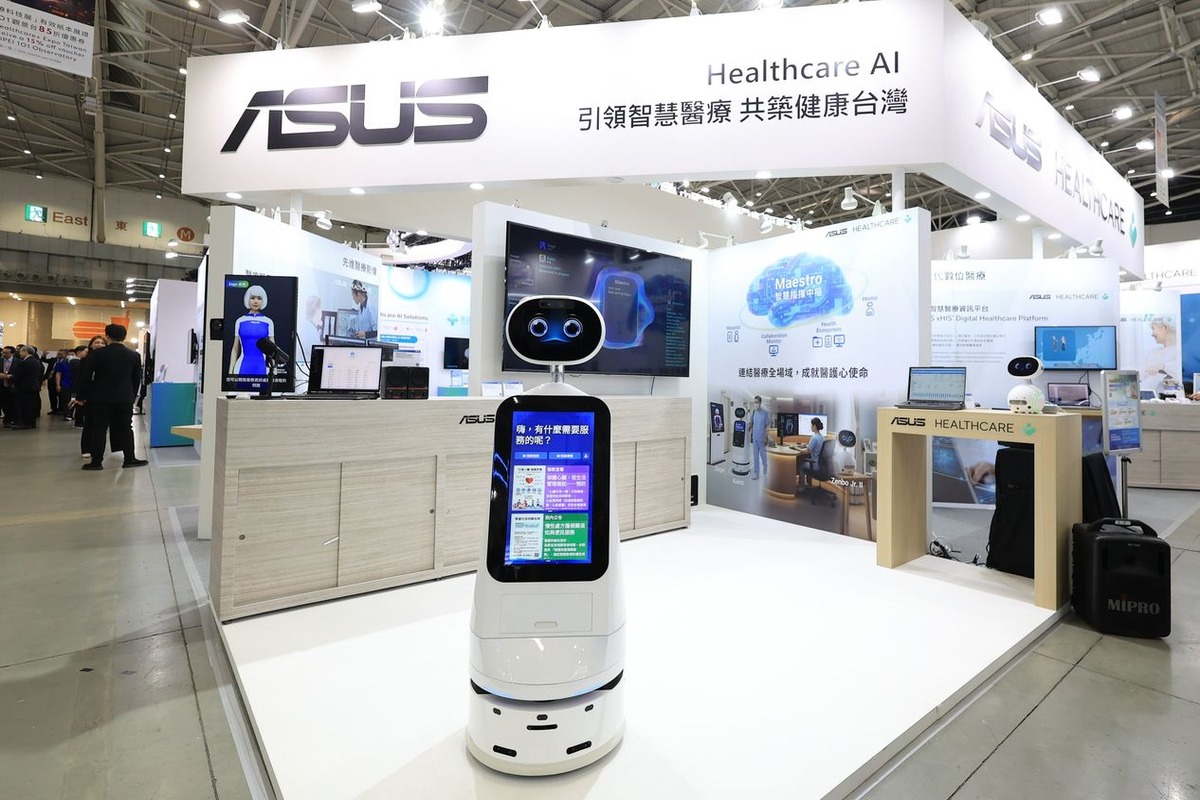
ASUS introduced a range of AI-driven healthcare technologies at the 2025 Healthcare+ Expo Taiwan, focusing on clinical efficiency, data integration, and medical workflow support. A key highlight was ASUS Maestro, an orchestration hub that coordinates service robots and virtual medical agents to manage routine clinical tasks, streamline navigation, and support patient communication. Maestro also connects with existing hospital information systems and remote-care platforms to extend care from hospital to home.
Several hospitals in Taiwan have adopted ASUS digital health solutions. The xHIS platform was implemented at New Taipei City Hospital to unify outpatient, emergency, and inpatient data while supporting documentation and clinical decision-making. Taipei Veterans General Hospital is deploying the ASUS Clinical AI Assistant, which drafts medical notes and will later include voice input and real-time decision support features.
ASUS also presented advancements in diagnostic tools, including the EndoAim endoscopy system, now used across many Taiwanese hospitals, and the LU800 wireless ultrasound device with automated measurement functions for emergency and primary care settings. The EchoLab portable ultrasound adds AI development capabilities within a single system.
A collaboration with Fujifilm integrates ASUS microLED displays with the Synapse 3D platform for detailed medical imaging. ASUS also showcased HealthAI Genie and HealthHub, which combine wearable data with AI-generated insights to support personal health management and community care services.















Leave a comment