



The Frankfurt Transport Company (VGF) and Siemens Mobility have reached a milestone with semi-automated test runs for the Digital Train Control System Frankfurt (DTC). A converted U5 metro prototype has been running on VGF’s test ring, operating at Grade of Automation 2 (GoA2), where trains run partially automated with driver supervision.
From 2027, VGF will begin digitalizing its train control system using Communications-Based Train Control (CBTC). Unlike the traditional block system, CBTC’s “moving block” technology allows trains to run at shorter intervals while maintaining safe braking distances. This will enable more trains on the same track, expanding service capacity without new infrastructure. The system also promises up to 25% energy savings, smoother rides, and reduced wear on vehicles and tracks.
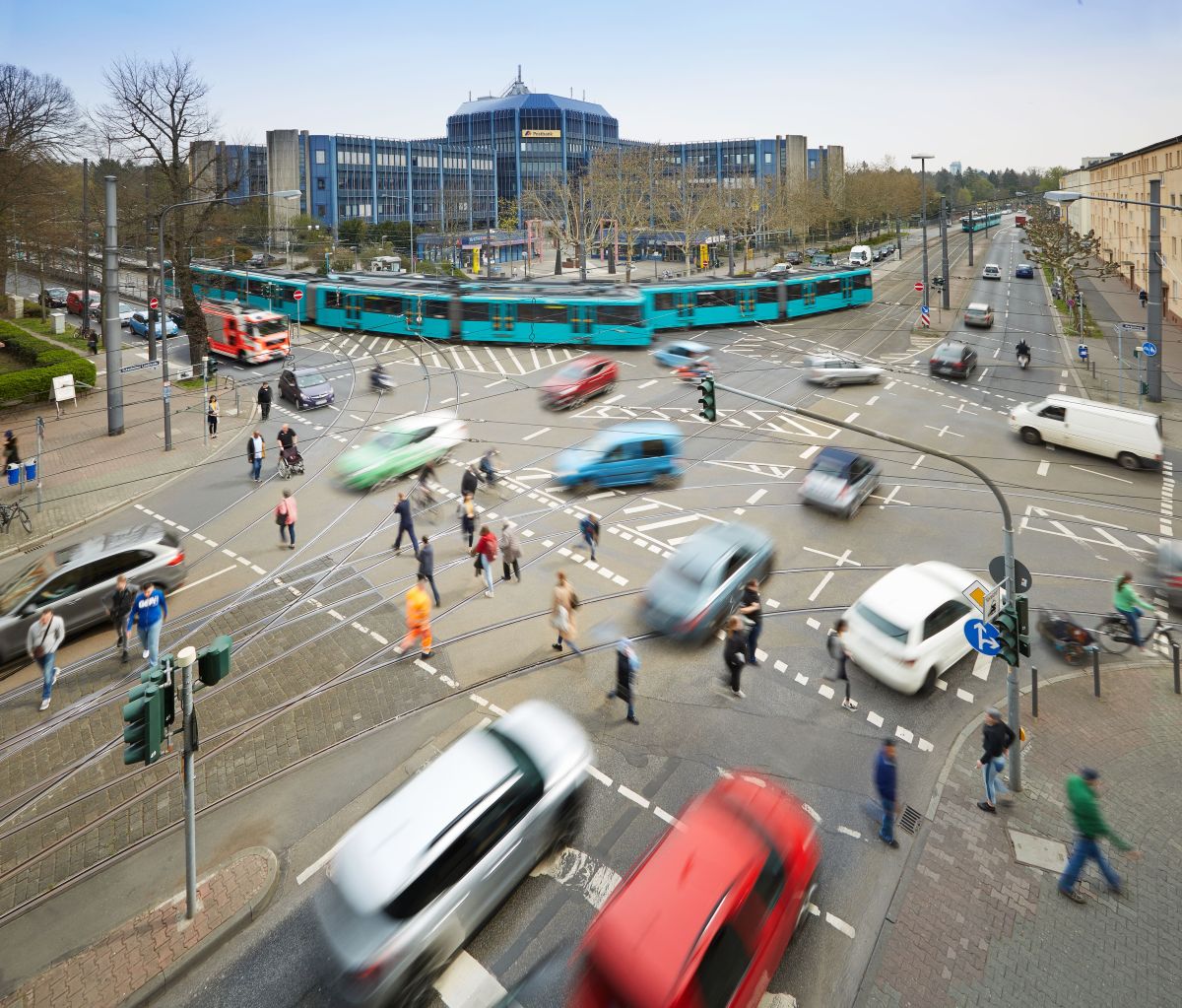
The DTC project is closely integrated with Frankfurt MIND(+), the city’s initiative to network railways, trams, and road traffic using Cooperative Intelligent Transport Systems (C-ITS). VGF became the first transport company worldwide to successfully test the interface between CBTC and C-ITS. This integration will help optimize traffic flows and make public transport more reliable and sustainable.
Siemens Mobility’s Trainguard MT technology is central to the project. It enables semi-automated operation, boosting capacity by up to 30%, improving punctuality, and achieving train headways of less than 100 seconds. Proven in cities such as Paris, New York, and Singapore, the system is now being deployed in Frankfurt.
Looking ahead, technology has already been installed on lines U4 and U5, with static system tests underway in September and October. The first passenger-free test runs on this section are scheduled for January 2026. Full CBTC-based operations will roll out on lines U4 and U5 by 2027, followed by the A-Route (U1, U2, U3, U8) by 2030, and the C-Route and tram network by 2033.
















Leave a comment