


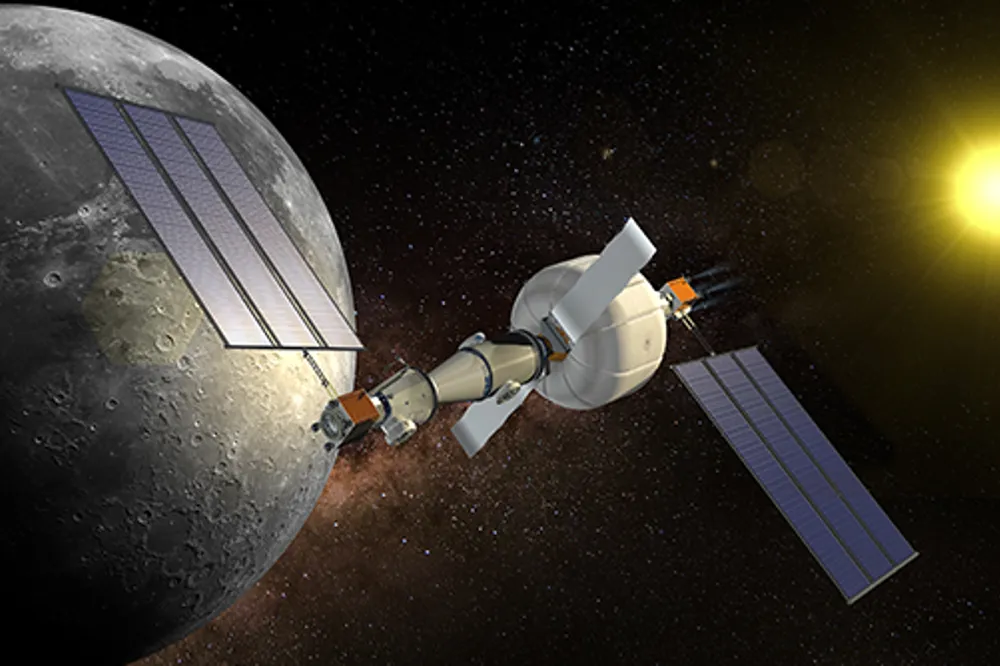
Astronauts may someday soon be orbiting the Moon or staying on the surface of Mars in a multi-floor inflatable habitat.
Space technologies company Sierra Nevada Corporation (SNC) has designed a new space habitat meant for long-duration stays in space.
The Large Integrated Flexible Environment (LIFE) habitat is under Phase 3 of NASA’s Next Space Technologies for Exploration Partnerships program, and a ground prototype is being used to evaluate how crew members perform mission tasks in outer space.
What LIFE is Made of
With an appearance reminiscent of a huge paper lantern, the three-story, 27-feet wide LIFE habitat is made of several soft layers:
- Vectran fabric weave, called the restraint layer, makes up the outermost layer; the fabric weave is strong enough to withstand the internal pressure necessary for a crew to live inside the habitat
- Urethane makes up the inner layer — the bladder — and is designed to keep the air inside the habitat
- Nylon fabric creates the middle liner, protecting the bladder from being damaged
The LIFE habitat is meant to travel into space furled inside commercial launch vehicles and will inflate on orbit to its full size to house four astronauts and their equipment.
The habitat’s three stories include science labs, robotics work stations, medical and sick bays, sleep and hygiene quarters, exercise equipment, a plant growth system and more.
Making the Most of LIFE
SNC’s Astro Garden system aboard the LIFE habitat is designed for produce including tomatoes, cabbage, lettuce and more to help sustain life in space for extended periods. The advanced plant-growth system promotes large yields while saving space, weight and power.
A waste management system compacts trash into bricks that can be used to protect against radiation on the LIFE habitat.
Beyond food production, SNC envisions its space station, made of multiple LIFE habitats and the SNC Dream Chaser spaceplane, to serve many industries and use cases, among them:
- In-space manufacturing, such as 3D printing
- Pharmaceutical and medical research
- Movie production
- Space tourism
“Our LIFE habitat offers unique capabilities for both lunar and Mars applications, making it the best, most versatile option for taking crews on long-duration missions,” said SNC Space Systems Group Sr. VP of Programs Janet Kavandi, a former NASA astronaut.
The LIFE habitat’s unique design can open new avenues in space exploration and outer-space living conditions.












Leave a comment